
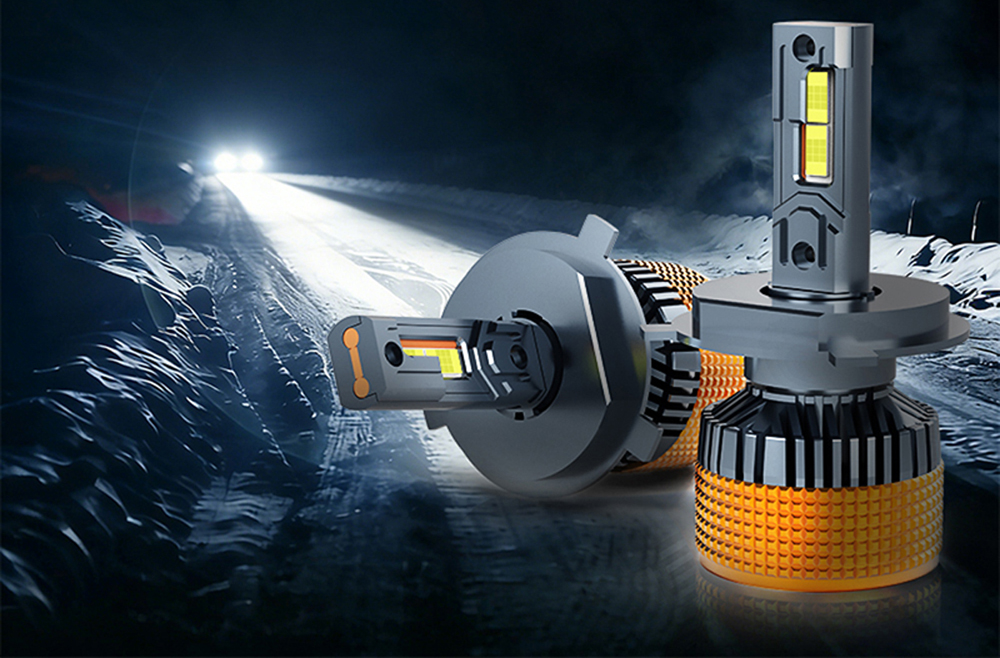
Upgrading or replacing car LED lights is one of the most common and practical automotive modifications for vehicle safety and appearance. However, many buyers and end users easily encounter problems such as poor brightness, fast light decay, flickering, water fog, short service life and non-compliant lighting effects due to unprofessional product selection. To help customers purchase stable, safe and high-quality LED car lights, we have sorted out the most essential buying considerations for reference.
1. Confirm Correct Bulb Model and Vehicle Compatibility
The first step before purchasing is to confirm the original bulb specification of the vehicle, such as H1, H4, H7, H8, H11, 9005, 9006 and other common base models. Different car models and high/low configurations often match different bulb sizes and socket positions. Choosing the wrong model will cause installation failure, poor fit or lighting deviation. Universal compatibility and original plug-and-play design are essential for smooth replacement without vehicle modification.
2. Focus on LED Chip and Driver Quality
The core quality of car lights depends on the LED chips and built-in driver. High-quality automotive-grade LED chips feature high brightness, low light decay and stable color temperature. Inferior chips will gradually darken within several months and cause poor night vision. Meanwhile, a built-in constant-current and anti-flicker driver is necessary to avoid dashboard error codes, flickering lights and circuit overload, ensuring long-term stable operation without damaging the original car circuit system.
3. Check Heat Dissipation Structure
Car LED lights work in high-temperature engine compartments for a long time. Insufficient heat dissipation will lead to rapid light decay, burnt chips and shortened service life. Reliable LED car lights adopt thickened aluminum heat sink, copper heat conduction or fan active cooling structure, which can quickly export heat and ensure continuous and stable lighting performance during long-distance driving.
4. Waterproof, Dustproof and Sealing Performance
Vehicle lights face complex outdoor environments including rain, snow, fog and dust. Excellent waterproof and dustproof performance directly determines the durability of the lights. Formal qualified products reach IP65 to IP67 waterproof grade with integrated sealing design and high-quality rubber rings, effectively preventing water ingress, fogging and oxidation. Poor sealing will easily cause lamp body water accumulation, short circuit and lamp damage.
5. Standard Light Pattern, No Glare and Easy Inspection Pass
Many low-cost LED lights suffer from scattered light, blurred cutting lines and strong glare, which will affect the vision of opposite drivers and fail legal inspection. High-quality LED car lights follow original optical design, with uniform light focus, clear near and far light boundary, reasonable irradiation distance and no dazzling stray light. They meet ECE and mainstream market lighting standards, safer for night driving and compliant for road use.
6. Official Certification and Market Compliance
For bulk procurement and overseas sales, product certification is essential. Regular factory LED car lights pass CE, RoHS and other international certifications, complying with European, American, Southeast Asian and Middle East market access standards. Certified products support smooth customs clearance, legal offline sales and platform listing without compliance risks.
7. After-sales Warranty and Factory Strength
Stable quality and perfect after-sales service are important factors for long-term cooperation. Professional LED lamp manufacturers provide 12-month or longer official warranty, effective technical support and replacement service for non-human damage. Meanwhile, mature factories support OEM/ODM customization, customized packaging and logo printing, helping distributors build their own brand and improve market competitiveness.
Conclusion
When purchasing LED car lights, buyers should not only focus on low price, but comprehensively evaluate compatibility, chip quality, heat dissipation, waterproof performance, optical effect and certification. Choosing stable and qualified factory products can reduce after-sales problems, improve customer satisfaction and bring more stable profits for automotive accessory distributors.