
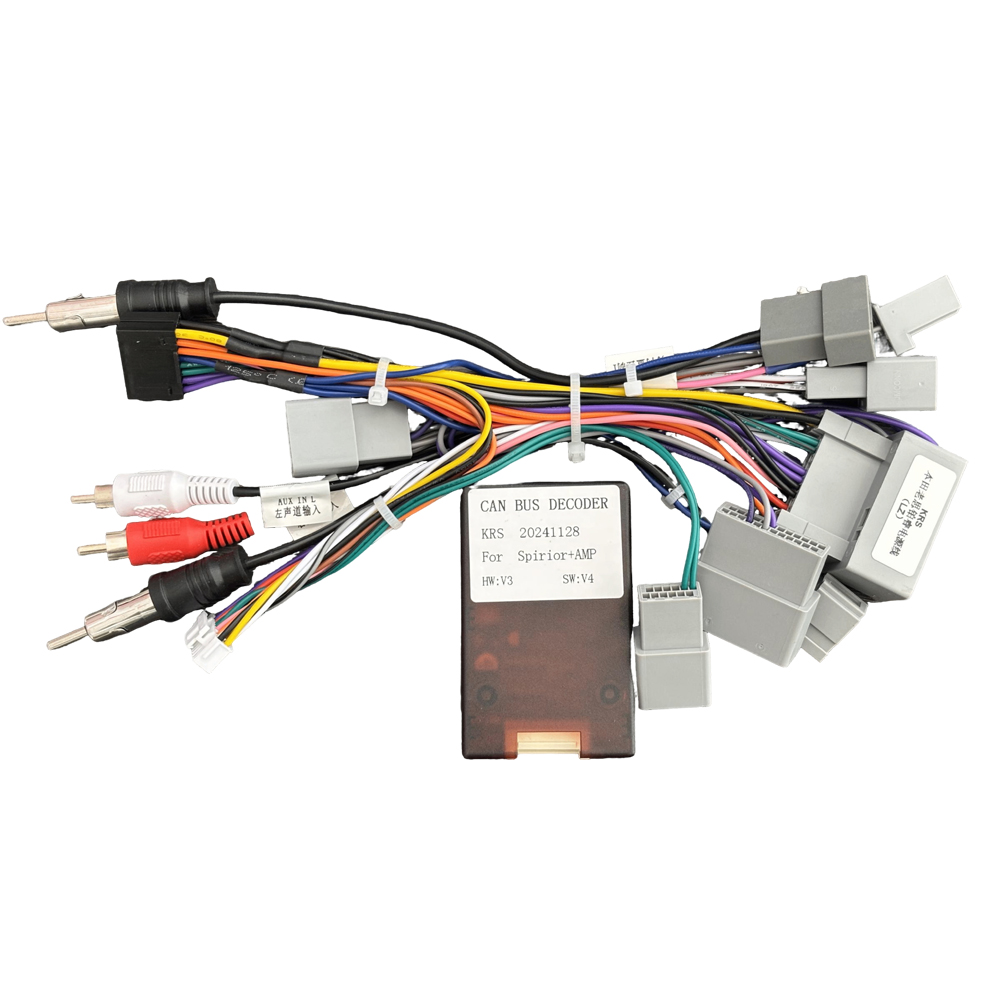
It’s a common confusion for car owners and installers: even the exact same car model may require dozens of different wiring harnesses. Choosing the wrong one often leads to installation failures, non-functional features, or even electrical damage. Below are the key reasons behind this phenomenon.
1. Different Original Vehicle Platforms
Most car manufacturers produce models on multiple platforms simultaneously. For example, Volkswagen’s PQ and MQB platforms share nearly identical exterior designs but have completely different internal circuitry, pin definitions, and head unit interfaces. These structural differences mean wiring harnesses designed for PQ-platform vehicles cannot be used on MQB-platform versions of the same model.
2. High vs. Low Trim Level Variations
The same car model typically offers high, mid, and basic trim levels with varying electrical configurations:
High-trim versions often include factory amplifiers, multifunctional steering wheels, original touchscreens, and CAN bus systems.
Basic trims may only have a simple radio with minimal wiring functions.
These differences in equipment and functionality require tailored wiring harnesses to ensure compatibility with each trim’s specific electrical setup.
3. Varying Connector Pin Counts
A classic example is Volkswagen’s Quadlock connector, available in 36pin, 40pin, and 52pin variants. Each pin count corresponds to unique power supply circuits, audio signals, and extended function wiring. Using a harness with the wrong pin count will result in mismatched connections and non-functional features.
4. Production Year and Facelift Updates
Cars undergo minor facelifts every 2–3 years. While exterior changes are often subtle, manufacturers frequently adjust internal wiring layouts, connector types, or electrical component positions. Wiring harnesses designed for pre-facelift models will not align with the updated electrical systems of post-facelift versions.
5. Different Aftermarket Android Head Unit Specifications
Aftermarket Android head units from various brands have distinct interface designs:
Some support factory amplifier outputs or retain steering wheel control.
Others include reserved ports for CarPlay, Android Auto, or reverse camera connections.
Budget models may simplify wiring by omitting non-essential functions.
Harness manufacturers produce specialized versions to match these diverse head unit requirements.
6. Regional Market Standards
The same car model sold in different regions (e.g., Europe, Southeast Asia, China) adheres to local electrical standards and power distribution logic. These regional differences in circuit design and component specifications necessitate region-specific wiring harnesses.
Buying Recommendations
First confirm your vehicle’s production year and platform (e.g., VW PQ/MQB).
Identify your car’s trim level (high/low) to match its electrical features.
Check the pin count of your original head unit connector (e.g., 36pin Quadlock).
Prioritize harnesses made with automotive-grade tinned copper wires for stable performance and durability.