
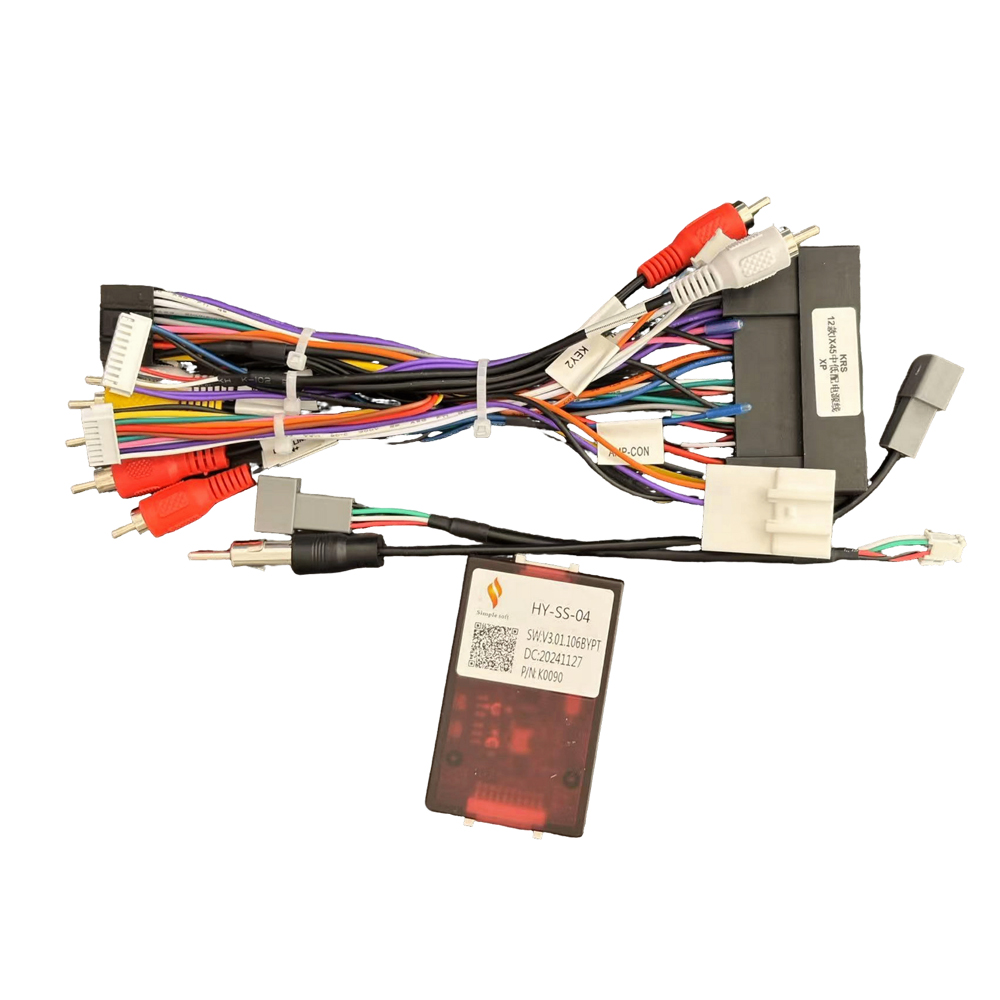
If you’re upgrading your car stereo or chasing better sound, you might wonder: Does the wiring harness really make a difference? Many car owners overlook this small but critical component, assuming “any harness works.” The answer? Yes—your wiring harness directly impacts sound clarity, bass depth, and even volume stability. Here’s why, and how to choose the right one for premium audio.
Why Wiring Harness Matters for Sound Quality
Your car’s wiring harness is the “nerve system” of your audio setup. It carries power from the battery to the head unit, and audio signals from the head unit to the speakers (or amplifier). Poor-quality or mismatched harnesses create three common sound issues:
1. Signal Interference (Static/Noise)
Cheap harnesses use thin, unshielded wires. These pick up electromagnetic interference (EMI) from the car’s alternator, engine, or other electrical components—resulting in annoying static, humming, or popping sounds, especially at high volumes.
Solution: Choose a harness with shielded wires (braided or foil layers) to block interference. For VW, Audi, or European cars, opt for Quadlock harnesses with built-in shielding—they’re designed for tight engine bays with heavy EMI.
2. Power Loss (Weak Bass & Muffled Sound)
Audio systems need stable, consistent power to deliver crisp highs and deep bass. Thin or low-grade copper wires in budget harnesses cause “voltage drop”—power is lost as it travels from the battery to the head unit/amp. This leads to:
Muffled vocals and weak bass response
Volume fluctuations when accelerating
Distortion at high volume levels
Solution: Prioritize harnesses made with automotive-grade tinned copper wires. Tinned copper offers better conductivity than ordinary copper, resists corrosion (critical for car interiors), and minimizes power loss.
3. Poor Connection (Sound Cuts Out)
Loose terminals, mismatched pins, or low-quality crimps in cheap harnesses cause intermittent connections. You might notice sound cutting out when hitting a bump, or one speaker not working at all.
Solution: Choose plug-and-play harnesses (e.g., vehicle-specific Quadlock, ISO harnesses) with precision-molded connectors. These fit your car’s original ports perfectly, eliminating loose connections and ensuring signal continuity.